







Golden Nine Malaysia 2026: What Cue Dealers Can Learn
The Malaysia 2026 international event gave cue dealers more than a result sheet. It offered a live look at how tournament pressure exposes equipment priorities. Oliver Jay reached the final and finished runner-up after competing through a field of accomplished players from several Asian markets. For pool cue manufacturers, premium pool cue suppliers, clubs, and serious players, the useful lesson is not that a cue wins a match by itself. It is that elite competition makes stability, feedback, balance, and player-equipment fit much easier to observe.
That matters in 2026 because buyers are comparing more shaft materials, low-deflection concepts, weight systems, tip diameters, and tournament-oriented configurations than before.
What Malaysia 2026 Revealed to Dealers
Tournament Exposure Is Different From a Product Demo
A few practice shots can make almost any premium cue feel impressive. A long international event is less forgiving. Repeated breaks, position shots, safety exchanges, recovery shots, and pressure situations make consistency more important than a striking first impression.
The Malaysia final was especially useful from that perspective. Oliver Jay recovered from a substantial deficit and continued creating chances deep into the match. The point for a dealer is not to credit the equipment for the comeback. The more useful observation is that cues for professional players must remain familiar when rhythm, pressure, and shot requirements change.
This is why tournament use can become valuable commercial evidence. A club buyer wants equipment that remains predictable through heavy play. An enthusiast wants a cue that still feels natural after several racks. A dealer wants specifications that can be explained without relying on vague claims.
International Competition Creates Cross-Border Demand
The event also highlighted the growing commercial relevance of Chinese-style nine-ball for premium pool cue suppliers. The field brought together players from several established cue-sports markets, giving the equipment seen in competition exposure beyond a single domestic market.
For dealers, that creates a different sales environment. Customers may arrive after watching a professional match and already know the type of performance they want. Players comparing cues for professional play often focus on practical details: shaft choice, tip diameter, balance adjustment, joint fit, and overall consistency.
A tournament story gets attention. Specifications and manufacturing evidence turn that attention into a buying decision.
How to Pick the Right Pool Cue After a Major Event
Start With the Shaft and Tip
Anyone researching how to pick the right pool cue should begin by separating the cue into the correct functional areas. The shaft is the slimmer front section. The butt is the thicker rear section used by the grip hand and carrying much of the cue’s mass. The tip contacts the cue ball, the ferrule sits directly behind the tip, and the joint connects the shaft and butt.
That terminology matters commercially because each specification answers a different question. Shaft construction affects feel through the bridge hand. Tip diameter affects the player’s sight picture and contact feel. Tip construction influences the character of contact. The butt contributes grip and balance. Joint quality affects how the two cue sections connect.
Maple and carbon-fiber shafts are often compared for their feel and deflection characteristics, but neither is a universal upgrade. The better choice depends on the player’s stroke, feedback preference, and playing style.
Treat Weight and Balance Separately
Weight alone does not tell a dealer how a cue will swing. Two cues at similar total weights can feel different because balance, shaft mass, butt construction, grip position, and stroke tempo interact.
An adjustable weight system therefore has practical value in a premium retail environment. It gives a player room to refine feel after real table time rather than making a final decision from one fixed factory setting. This is particularly relevant for cues for professional players, where small changes in perceived swing weight may matter more than they do with a house cue.

What the PS3-01 Shows About Tournament Specification
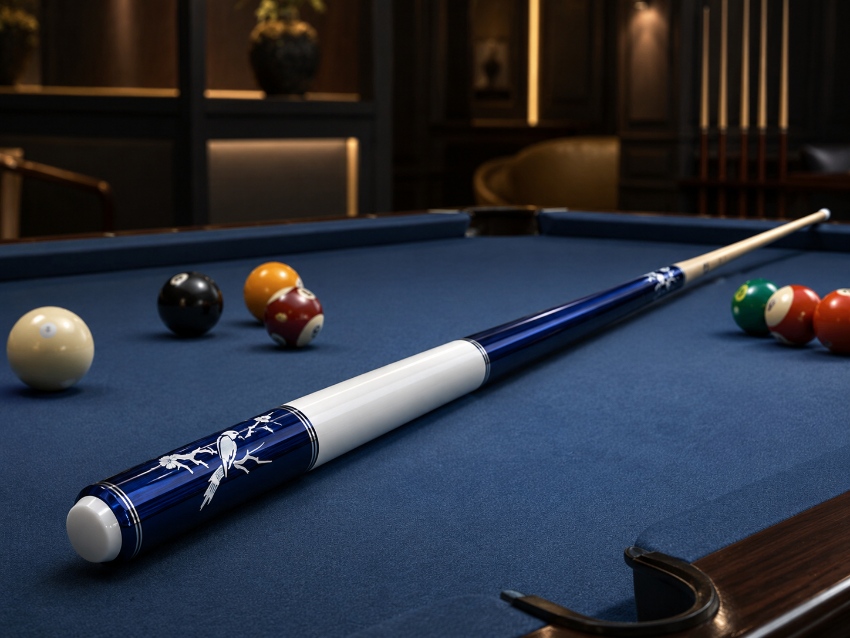
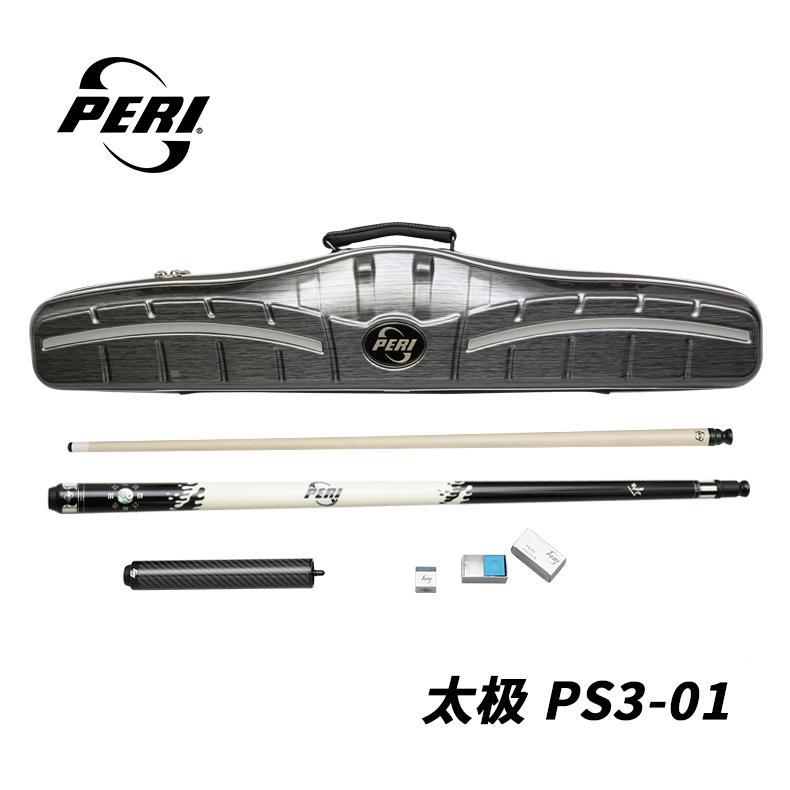
The Tai Chi Special Edition Water PS3-01 provides a useful example of how a competition-oriented cue can be specified for serious players. PERI configures the playing cue with a P8R shaft, 12.5 mm tip diameter, multi-layer tip, imported XTC ferrule, Radial Pin joint, adjustable weighting, and a 20 cm carbon-fiber extension. The complete cue is specified at 18–19 oz.
Selection area | PS3-01 specification | What a dealer should evaluate |
Shaft | P8R North American hard maple | Feedback, straightness, bridge-hand feel, stability |
Tip | 12.5 mm multi-layer tip | Contact feel, control preference, maintenance |
Ferrule | Imported XTC | Impact resistance and transmission between tip and shaft |
Joint | Radial Pin | Connection fit between shaft and butt |
Weight | 18–19 oz | Player preference and stroke rhythm |
Weight system | Adjustable | Balance and swing-weight fine-tuning |
Extension | 20 cm carbon fiber | Reach on stretched or difficult table positions |
Intended use | Chinese eight-ball and nine-ball | Fit for tournament-focused retail customers |
Read the Complete System, Not One Feature
The table also shows why product comparisons based on one specification are weak. A 12.5 mm tip does not explain the entire cue. Neither does a maple shaft or a Radial Pin.
The more useful sales conversation connects the shaft, tip, ferrule, joint, butt balance, and extension. A player who likes the shaft feedback but dislikes the overall swing may need a weight adjustment rather than a different shaft. A player struggling only with long-reach positions may gain more from the extension than from changing the complete cue.
This system-level explanation helps premium pool cue suppliers compete on fit rather than decoration.
Why Factory Consistency Matters
Dealers Need Repeatable Production, Not a Hero Sample
The strongest lesson for pool cue manufacturers comes after the tournament ends. Tournament visibility matters only if commercial production can deliver consistent specifications from one cue to the next.
The process includes strict wood selection and grading, controlled natural dehydration under constant temperature and humidity, moisture control below 8%, repeated CNC shaft machining, and further stabilization between machining stages. Finished cues are also checked for straightness, concentricity, finish quality, adhesion, hardness, and abrasion resistance, with quality inspection reports supplied for products.
That is more useful to a B2B buyer than an unsupported statement such as “professional quality.” Dealers carrying premium inventory need answers when a club asks about batch consistency or when an advanced player compares a replacement shaft with the original.
This is where dealers can make a more meaningful distinction between cue makers. The real question is not which maker receives the loudest endorsement. It is which manufacturing process can turn an approved sample into repeatable inventory.

Conclusion
Malaysia 2026 showed why major cue-sports events matter to the equipment trade. Competition can create awareness almost overnight, but awareness alone does not build a durable dealer program.
For pool cue manufacturers and premium pool cue suppliers, tournament credibility becomes valuable when it connects to measurable specifications, correct cue fit, repeatable manufacturing, and clear product education. For dealers, tournament exposure is only the starting point. The real test is whether shaft, tip, ferrule, joint, balance, and production consistency continue to make sense when a customer starts asking technical questions.
FAQ
How should premium pool cue suppliers choose shaft material?
Start with the player’s stroke and preferred feedback. Maple and carbon-fiber shafts differ in deflection, surface feel, straightness, and maintenance, so the choice depends on how the cue feels and performs for the player.
How do I know how to pick the right pool cue weight?
Many current buying guides use about 19 oz as a practical starting reference, but balance and stroke comfort matter as much as the number itself. An adjustable weighting system gives experienced players more room to refine the final feel.
What should dealers ask pool cue manufacturers about after-sales support?
Ask about inspection records, replacement shafts, compatible tips and ferrules, joint specifications, weight components, extensions, and accessory availability. After-sales support is easier when the original technical configuration is documented accurately.
What specifications matter most in cues for professional players?
Shaft straightness and feel, tip diameter and construction, ferrule performance, joint fit, total weight, balance, and extension compatibility all matter. Weight, tip, shaft, and joint specifications often have the greatest influence on how a cue feels, fits the player, and performs during play.
