







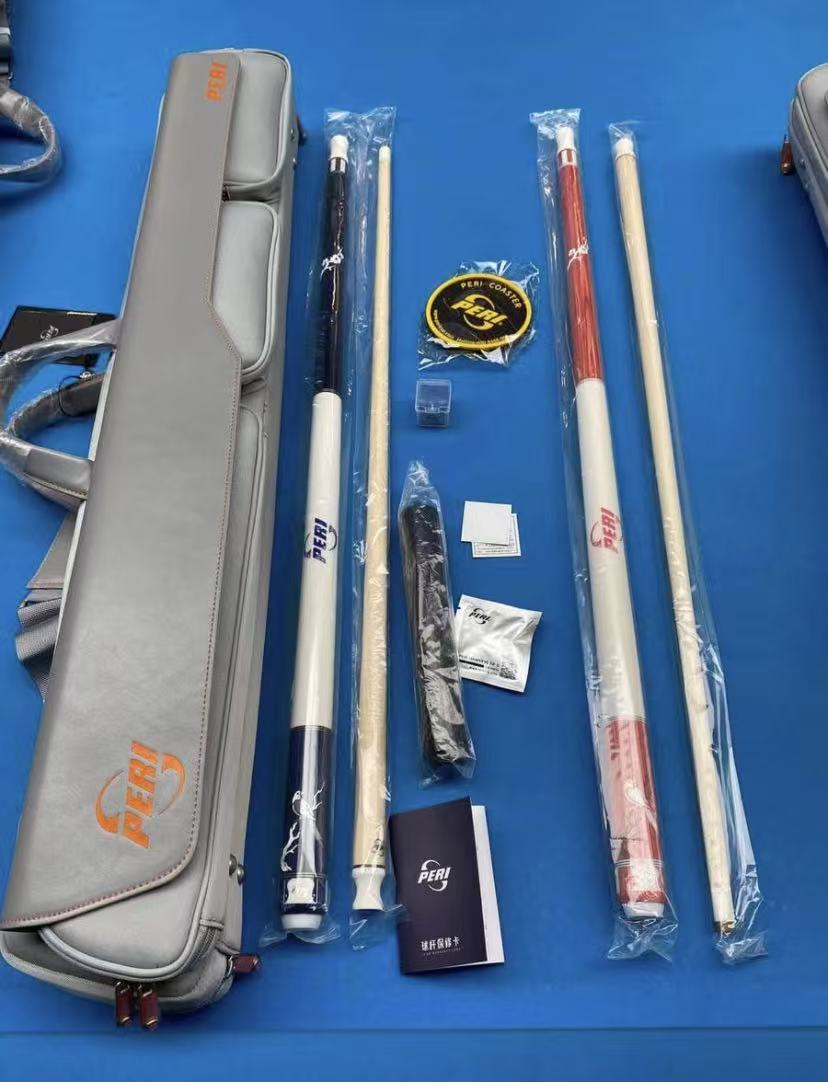
A cue can feel comfortable in your hand and still feel awkward once you start playing. The useful question is whether you can deliver it smoothly and judge cue-ball speed without extra effort. Try a familiar weight first, then compare a nearby option through ordinary shots. Your best choice is the weight you can control repeatedly, including toward the end of a session.
What the ounce number actually tells you
The weight describes the complete playing cue. The shaft is the narrow front section carrying the tip; the butt is the thicker rear section held by your grip hand. An 18-ounce cue means the assembled cue weighs 18 ounces, not that its shaft or butt does on its own.
Balance explains why equal weights can feel different. It describes how mass is distributed along the cue. Two cues marked 19 ounces can place different loads on your bridge and grip hands, so their movement may feel different even though the scale gives the same reading.
When trying a PERI competition pool cue, compare both the ounce number and the assembled feel. Keep your normal grip position while trying each option. Moving your hand to make one feel comfortable changes the comparison and may hide a poor fit for your usual stance.
A useful starting weight for comparison
A 19 oz pool cue is a practical starting point if you have no established preference. Treat that as a trial choice, not a prescription. If a cue you already use feels comfortable, its actual weight offers a more personal reference than a number recommended by somebody else.
Small comparisons are easier to interpret than large jumps. Try one nearby weight while keeping the shaft, tip, cue length and grip surface as similar as possible. Otherwise, you may prefer the different tip response or handle texture and mistakenly credit the weight.
|
Trial option |
Question to ask during play |
Reason to keep comparing |
|
Lighter than your reference |
Does it move freely through the stroke? |
You rush delivery or struggle to judge speed. |
|
Your current reference |
Can you repeat soft and medium shots? |
You grip harder as the session continues. |
|
Heavier than your reference |
Does the added resistance feel comfortable? |
Your arm works harder or the stroke shortens. |
These observations help narrow a trial; they do not diagnose a weight problem by themselves. A rushed stroke can also come from timing, and poor position play can come from judging the shot incorrectly. Look for a repeatable difference when you switch between the cues.

How lighter and heavier cues feel during a rack
When a lighter option deserves a try
A lighter cue requires less force to accelerate at the same rate. That makes it worth trying if your current cue feels laborious through the forward stroke. Watch whether your grip stays relaxed on routine shots, especially after you have played for a while.
Comfort alone is only part of the decision. Try a gentle safety and a medium-speed position shot with the lighter option. If you enjoy the movement but keep sending the cue ball beyond your intended area, give yourself time to adjust before deciding whether the change helps.
When a heavier option deserves a try
A 20 oz pool cue provides a useful heavier comparison against a 19-ounce reference. Notice how it feels through the backswing and forward delivery. Some players prefer the extra resistance, but a heavier cue does not automatically produce a straighter stroke or better speed control.
The deciding point is whether the weight remains comfortable across different shots. A cue that feels satisfying on firm shots may feel cumbersome when you need a delicate touch. Include both situations before choosing, rather than judging everything from your strongest hit.

What an adjustable cue lets you compare
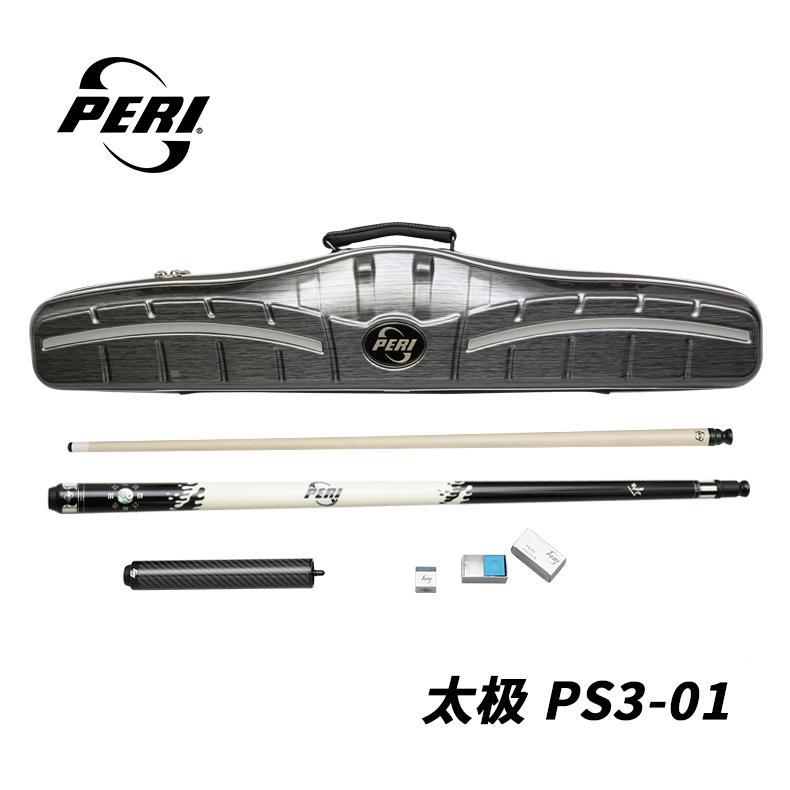
An adjustable cue can help you explore weight while retaining familiar contact points. For example, our PERI Jingyuan ME offers an adjustable weight mechanism and a stated complete-cue weight of 18–19 ounces. An 18 oz pool cue in that range gives you a lighter reference without assuming that every model reaches every weight.
Adjustment still needs to respect the particular cue. Confirm the supported settings and compatible weights before changing anything, and weigh the assembled cue afterward. The stated 18–19-ounce range is not a promise that the Jingyuan ME can be configured to 20 ounces.
Adding mass toward the rear also changes balance. A weight adjustment in the butt does not make the shaft heavier; it changes the complete cue's mass distribution. Recheck the feel at the table after adjustment, even if you have reached the number you wanted.
The table test that makes the choice clearer
A short, repeatable routine is more informative than random shots. When comparing quality pool cues, use the same table and ball positions so that the main difference is the cue you are trying. Keep the trial simple enough to repeat with your original cue afterward.
· Play several gentle safeties toward a chosen stopping area.
· Repeat a medium-speed position shot from the same layout.
· Include a longer shot with your normal playing stroke.
· Return to the original cue and compare effort and control.
The pattern across attempts matters more than one excellent shot. Note where the cue ball finishes and whether you tighten your grip to deliver it. If the difference remains unclear, keep your familiar setup for now and repeat the comparison another day. There is little value in changing a comfortable weight without a clear reason.
A weight you can settle into
Choose the weight that makes your ordinary stroke comfortable and your speed judgment repeatable. Use a familiar cue as your reference, compare one nearby option, and account for balance before drawing a conclusion. Once the choice feels settled over several sessions, give yourself consistent practice with it.
If you are interested in a PERI cue or would like help choosing a suitable weight, please contact PERI to discuss your playing preferences.
FAQ
What is a sensible pool cue weight for beginners?
Around 19 ounces is a reasonable trial starting point. Compare a nearby lighter option if it feels tiring. Comfort, a relaxed grip and repeatable delivery matter more than finding a supposedly perfect beginner number.
Is a heavier cue more accurate?
Extra weight does not guarantee accuracy. Judge whether you can deliver the tip where intended and control cue-ball speed across repeated shots with your normal technique.
Can two cues of the same weight feel different?
Yes. Their balance, grip dimensions and shaft setup can differ. Compare them assembled, using your usual stance and grip position.
Can I adjust every cue to my preferred weight?
No. Available adjustments depend on the model and compatible hardware. Confirm the supported range before choosing a cue on the assumption that its weight can be changed later.
Should I recheck weight after changing the shaft?
Yes. A replacement shaft can change the complete cue's weight and balance. Weigh and try the assembled combination before deciding whether another adjustment is needed.
