







Players shifting from casual 'house cue' games to focused competitive sessions often find that mastery relies equally on skill and equipment. Intermediate players face a unique challenge: their swings have become steady enough to demand gear that responds accurately to their actions. Yet, they frequently overlook how integral components—such as the pool cue handle, the precision of pool cue joints, and proper maintenance with a pool cue burnisher—shape their performance at the table
Why Does the Pool Cue Handle Material Directly Affect Your Stroke?
The connection between a player's hand and the cue is the primary point of power transfer. Many intermediate players mistakenly focus solely on the shaft, ignoring how the pool cue handle dictates grip pressure and comfort during critical moments..
- FrictionManagement: The exterior surface of the pool cue handle must deliveradequate grip to prevent slipping during a stroke. However, it must alsoallow the cue to glide smoothly through the bridge hand. Fabrics thatprove too slippery force a player to squeeze harder, resulting in excessstrain in the forearm.
- Sweatand Moisture Control: Intense matches induce sweat. A well-crafted poolcue handle, often lined with premium leather or specialized fabrics,effectively manages moisture. Consequently, your grip remains dry andconsistent throughout an extended match.
- VibrationDampening: A finely made pool cue handle acts as an additional bufferagainst vibrations. It isolates the shock from ball contact, allowing youto feel the strike without the harsh jolt that might disrupt yourfollow-through.
Handle/Wrap Type | Characteristic | Ideal For |
Unwrapped Wood | Purest tactile feedback | Players who prefer a “raw” feel |
Leather Wrap | Excellent friction and moisture control | Competitive players in long matches |
Linen/Irish Wrap | Classic grip with reliable longevity | Traditionalist players seeking stability |
What Role Do Pool Cue Joints Play in Cue Performance?
While the handle provides the grip, the pool cue joints define the cue's inherent characteristics. These components act as precision links, guiding energy transfer from your arm, through the butt, and into the shaft.
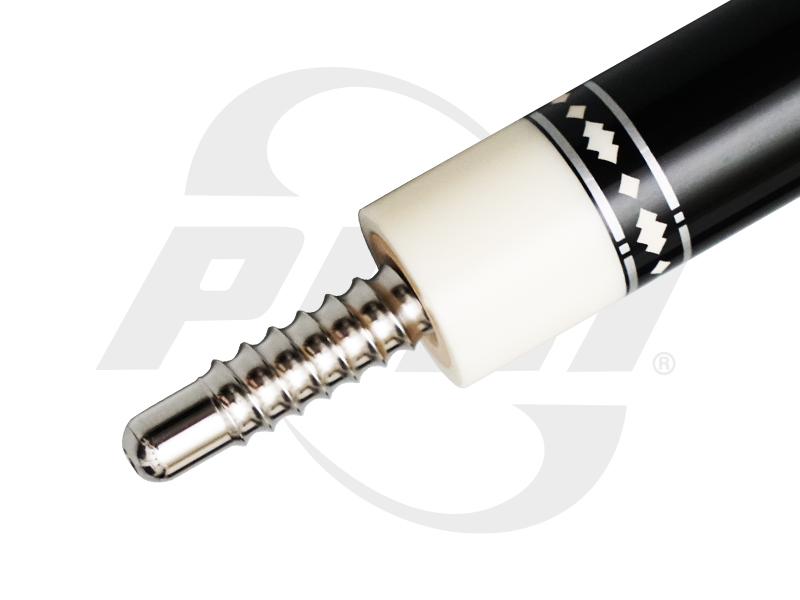
- Energy Transfer Efficiency: PremiumPrecision-machined joint systems ensure power is transmitted without loss.If joints exhibit even the slightest looseness or flex, swing energy isabsorbed by the joint, resulting in a mushy feel that hinders accurate judgmentof speed and spin.
- Feedback Consistency:Constructed from selected metal alloys, quality joints produce a distinctsound and tactile feedback. Reliable signals from the joints help a playerdevelop a 'feel' for the cue, which is crucial for consistentshots at longer ranges.
- Structural Integrity:Intermediate players frequently disassemble and reassemble their cues.Tough pool cue joints guarantee the shaft and butt align perfectly throughcountless setups, eliminating vibrations that damage accuracy.
How to Maintain Your Equipment for Long-Term Precision?
Eglecting maintenance is a common error that prevents players from reaching their peak. A essential tool for every dedicated player is the pool cue burnisher. Over time, constant finger contact and body oils raise the wood fibers on the shaft, creating a rough, uneven layer that creates resistance against the bridge hand.
Incorporating a pool cue burnisher into your routine creates a straightforward but vital habit:
- Clean the shaft: Usea dry, fiber-free cloth to remove chalk residue and surface dirt.
- Apply burnishing technique:Grasp the pool cue burnisher and apply steady, firm pressure while movingit smoothly along the entire length of the shaft.
- Seal the wood: Thisprocess compresses the wood fibers back into place, closes pores, andcreates a sleek, protective coating that repels dirt and sweat.
By adding a pool cue burnisher to your regular weekly schedule, you wipe out tackiness in your swing. This lets your form continue smoothly and dependably.
What Are the Signs That You Are Ready for an Equipment Upgrade?
Intermediate players often hit a performance plateau. This often stems not from a lack of talent, but from missing mechanical feedback from their tools. Consider an upgrade if you observe the following:

- InconsistentFeedback:Your swing is refined, but your current cue delivers varying sensations onidentical shots.
- JointWear: If pool cuejoints feelloose even when fully tightened, your ability to execute delicate touchshots is severely impaired.
- HandleDegradation:A worn pool cue handle forces you to unconsciously adjust your grippressure, leading to inconsistent swing mechanics.
- MaintenanceFailure:If burnishing no longer yields a smooth feel, the wood fibers may havereached a stage where their base strength is compromised.
How to Conduct a Professional-Grade Equipment Fitting?
When transitioning to advanced-level gear, treat the selection process as a technical assessment. Focus on functionality rather than just aesthetics:
- TheHandle Test:Grip the pool cue handle in your standard stance. Verify the diametersuits your hand size. A handle that is too wide restricts wrist movement,while one that is too slim requires excessive tension.
- The JointInspection:Fasten the joint securely. The connection should appear flawless with nogaps. The transition between segments must feel smooth even under impact.
- TheBalance Check:A properly weighted cue should feel like a natural extension of your arm,rather than a burden. The placement of weight pins and the density of thewood in the handle are key to achieving this equilibrium.
Conclusion
Superior billiards performance combines precision control with suitable instruments. By caring for your gear properly—ensuring a comfortable pool cue handle, an ideally connected pool cue joint, and a well-maintained shaft using a premium pool cue burnisher—you eliminate variables that cause inconsistency. Selecting these high-quality options, including those crafted by PERI, signals dedication. Moreover, players using precise equipment often find they can devote full focus to the game, confident that their gear supports every intricate shot they pursue.
FAQ
Q: Why do some pool cue joints feel tighter than others?
A: This generally stems from precision machining. Premium components are manufactured to stricter tolerances, which prevents friction during assembly while ensuring a firm, vibration-free bond essential for intermediate play.
Q: Can using a pool cue burnisher cause too much damage to my shaft?
A: Yes. While a pool cue burnisher is highly beneficial, it should be used with balanced force and only as needed. Excessive polishing may, over time, cause the wood to swell excessively or lose its natural grain structure.
Q: How do I know if my pool cue handle is the right diameter for me?
A: This is personal, but a useful guideline is that when you wrap your hand around the handle, your fingers should meet your thumb lightly. If your fingers overlap significantly, the handle is too slim.
Q: Are all pool cue joints interchangeable?
A: No. Joints are specific to individual manufacturers and models. You should avoid forcing joints that are not designed to be compatible, as this will permanently damage the threading.
Q: Does a pool cue burnisher work on all types of finishes?
A: No. A pool cue burnisher is most effective on untreated or lightly finished wood shafts. If your shaft has a thick varnish or resin layer, the burnisher will have no effect and may potentially damage the finish.
