







Introduction
In cue sports equipment sourcing, buyers do not evaluate a high-end pool cue by appearance alone. What truly matters in actual purchasing decisions is how consistent the cue feels across various production batches. Buyers also check how stable the shaft remains under long-term use. Furthermore, they consider whether the factory can maintain identical performance standards on a large scale.
For distributors, club operators, and professional players, even a tiny variation in shaft response can directly affect cue ball control. This variation can also impact match outcomes. Because of this, sourcing from a reliable global OEM supplier has become a practical requirement. It is no longer just a marketing preference in today’s billiards equipment market.
PERI’s product ecosystem clearly reflects this demand through structured cue engineering. In this system, shaft stability, joint precision, and controlled wood processing are treated as core performance variables. They are never viewed as optional upgrades.
OEM Manufacturing Standards in Modern Cue Production
In the billiards industry today, billiard cue manufacturers are increasingly evaluated through their production control systems. They are rarely judged on isolated craftsmanship alone. The real competitive advantage comes from a factory's ability. A factory must ensure identical cue behavior across hundreds or thousands of units.
A professional OEM system must maintain strict control over raw material selection. It also needs to manage humidity conditioning, machining precision, and final inspection. In PERI’s production process, which is described in its internal manufacturing documentation, maple wood is treated carefully. The wood goes through constant temperature and humidity natural dehydration. The factory avoids chemical acceleration methods. This careful process preserves internal fiber stability. It also reduces long-term deformation risk. Consequently, this directly supports cue consistency during extended competitive use.
For global distributors and clubs, this specific level of process control is absolutely critical. Without it, even cues labeled under the exact same specification may deliver a completely different feel and accuracy. Such inconsistency is totally unacceptable in serious training or tournament environments.
Stable Competition Maple Cue Shaft as Performance Core
The stable competition maple cue shaft is the most important structural element in any high-end pool cue. This is because it directly determines how energy is transferred during impact. Shaft instability always leads to unpredictable cue ball reaction. This issue is especially clear in long-distance shots and spin-controlled positioning.
In PERI’s production structure, shafts such as P8, P8S, and P20 are made from North American hard maple. The wood undergoes long-term natural seasoning that exceeds five years. This process ensures stable internal moisture balance and consistent density across the shaft.
This careful design approach provides three essential performance outcomes:
· consistent flex response across different temperature and humidity conditions
· reduced warping risk during long-term usage
· predictable cue ball feedback during high-spin shots
For professional players, this core stability is much more valuable than decorative craftsmanship. It directly impacts their competitive accuracy at the table.

Engineering Structure Behind High-end Pool Cue Systems
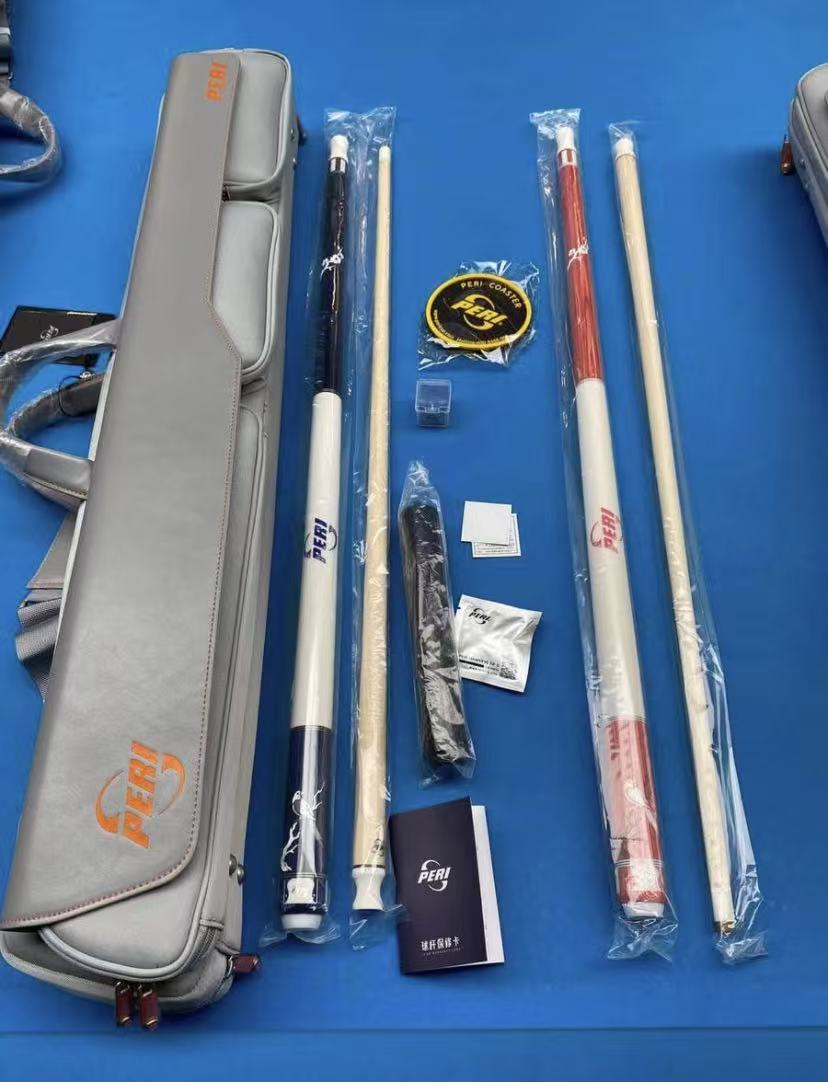
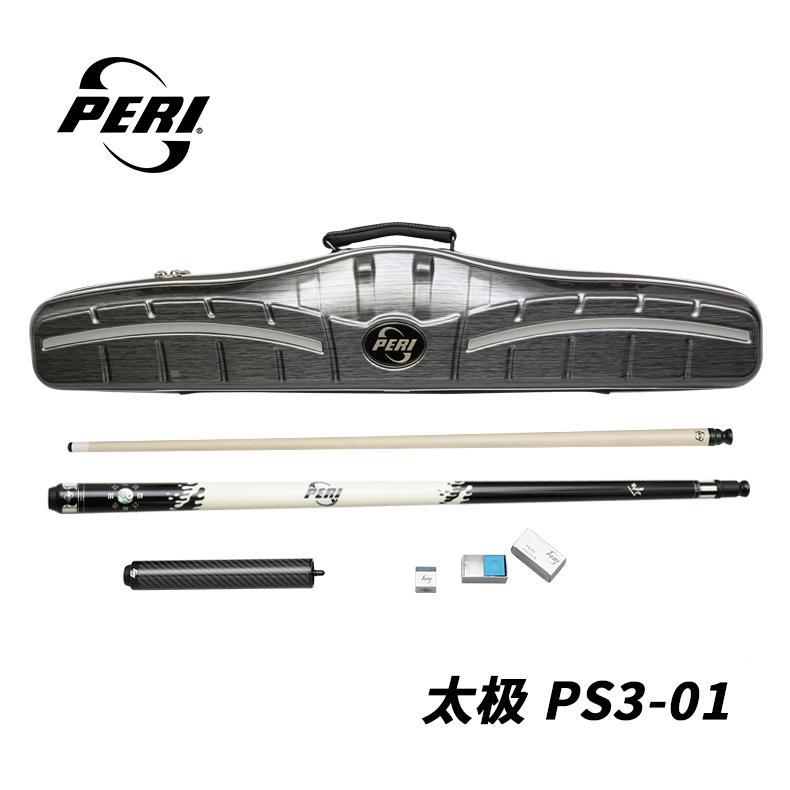
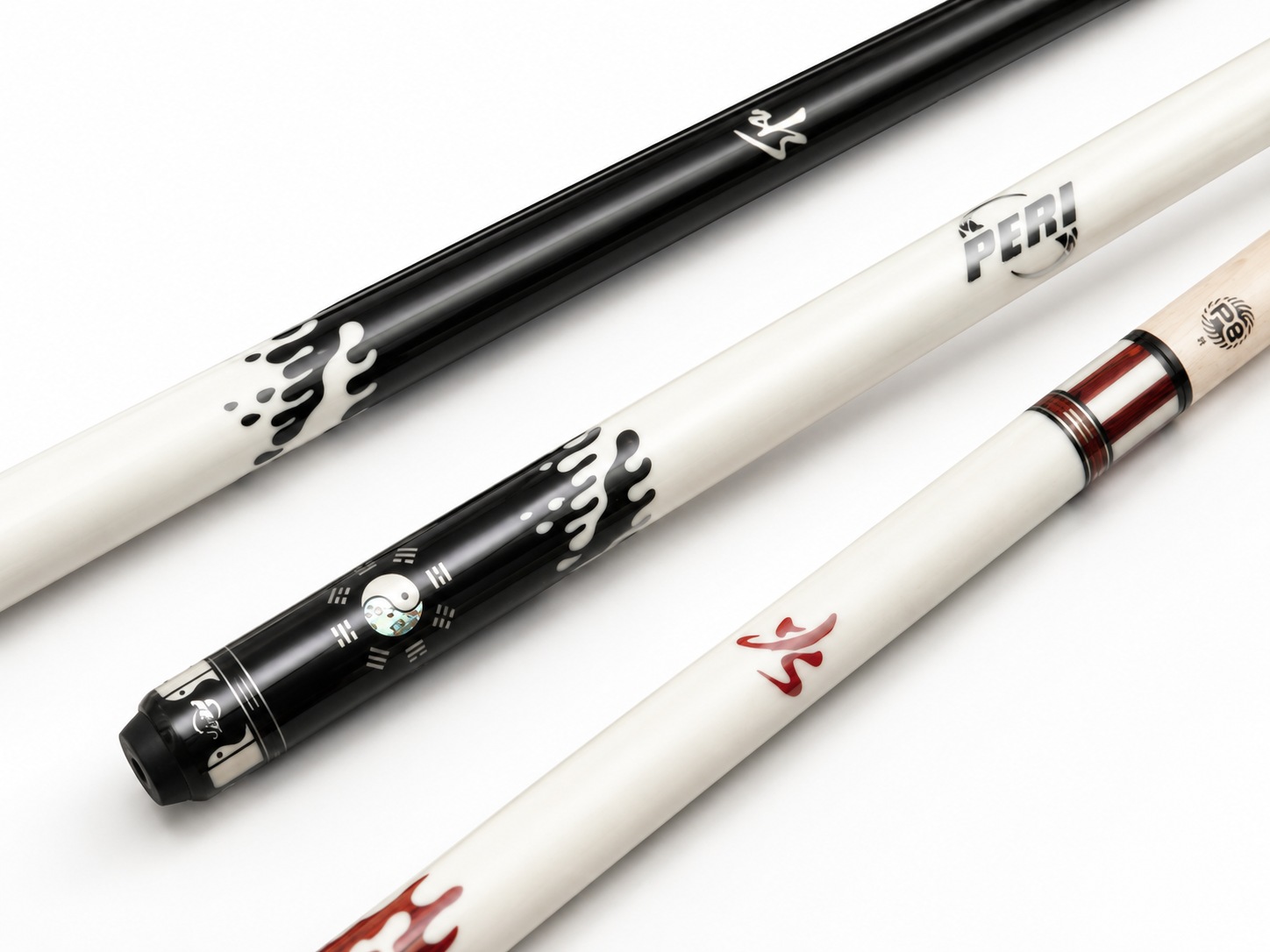
A high-end pool cue is never defined by a single component. Instead, it is defined by the complex interaction between the shaft, ferrule, joint, and tip system. In tournament-oriented models such as the Tai Chi Special Edition Water PS3-01 and Fire PS3-02, every structural element is carefully engineered. The goal is to reduce energy loss and firmly maintain stroke consistency.
The radial pin joint ensures a very tight alignment between the cue butt and the shaft. This tight fit minimizes micro-vibration during impact. The imported XTC ferrule provides excellent shock absorption. At the same time, it protects the shaft from dangerous stress fractures. At the front end, the Night Fury multi-layered tip greatly enhances cue ball grip. This specific feature enables controlled spin without sacrificing any directional stability.
These components function together as a unified system rather than as independent upgrades. This system-level engineering approach is exactly what separates professional-grade cues from basic entry-level equipment in tough competitive environments.
|
Specification |
Tai Chi Water PS3-01 |
Tai Chi Fire PS3-02 |
|
Shaft |
P8R maple shaft |
P8R maple shaft |
|
Tip |
Night Fury multi-layered |
Night Fury multi-layered |
|
Ferrule |
Imported XTC |
Imported XTC |
|
Joint |
Radial pin |
Radial pin |
|
Weight |
18–19oz |
18–19oz |
|
Extension |
20cm carbon fiber |
20cm carbon fiber |
|
Case |
Aurora cue case |
Aurora cue case |
|
Price |
$1554/set |
$1586/set |
This detailed structure demonstrates how billiard cue manufacturers design cues. They do not view them as isolated products. Instead, they build them as fully integrated performance systems for serious competitive use.
Application Value in Clubs and Competitive Training
In real-world usage environments such as clubs, academies, and tournament venues, consistency is much more important than individuality. Training systems depend heavily on repeated motion patterns. Any slight variation in cue response can quickly disrupt proper muscle memory development.
This is exactly where Chinese pool cue brands with mature OEM systems provide practical advantages. By ensuring that each cue within the same model behaves identically, training centers can maintain standardized performance conditions. They can do this easily across multiple tables.
The Tai Chi series is frequently used in structured training environments. Its stable maple cue shaft and controlled weight system allow players to focus purely on stroke mechanics. They do not have to worry about frustrating equipment variation. This reliability improves learning efficiency. It also significantly reduces adaptation time when players transition between daily practice and actual competition.
For distributors, this strict consistency also reduces after-sales variation complaints. This is because the equipment behavior remains highly predictable across very large batches.

Conclusion
The development of cue sports equipment is increasingly defined by strict manufacturing precision rather than simple visual design. A global cue OEM supplier must integrate stable maple shaft engineering, precision joint systems, and tightly controlled production processes. This integration is necessary to meet the high expectations of modern competitive environments.
High-end pool cue performance is no longer just a matter of isolated craftsmanship. It is the direct result of structured engineering systems that ensure repeatable accuracy. As demand from busy clubs, distributors, and professional players continues to rise, consistency has become the true benchmark of value in modern billiard cue manufacturing.
FAQ
What defines a High-end pool cue in competitive billiards?
A High-end pool cue is defined by shaft stability, precision joint alignment, and consistent energy transfer performance. It is not defined merely by external design features.
Why is a stable competition maple cue shaft important?
It ensures consistent flex behavior and significantly reduces deformation risk. It also greatly improves cue ball control accuracy during competitive play.
How do billiard cue manufacturers ensure product consistency?
They rely strongly on controlled wood seasoning and advanced CNC machining. They also use strict straightness and concentricity inspection systems.
Why do Chinese pool cue brands invest in OEM production systems?
Because OEM systems allow scalable manufacturing. At the same time, they maintain highly consistent performance across very large production batches.
What role does a global cue OEM supplier play in the market?
It provides standardized cue performance and stable supply capacity. It also offers reliable customization options for distributors and professional buyers.
